
Choosing the right travel stroller is not just about finding the lightest model or the smallest folded size. The best travel stroller should suit your baby's age, comfort needs, sleeping habits, and your family's lifestyle
At ToySpark, we often meet parents looking for the most compact stroller available, only to discover that some models are designed for babies aged 6 months and above rather than newborns.
Understanding these differences can help you choose a travel stroller that is practical for your journey without compromising your baby's needs.
1. Start With Your Baby's Age
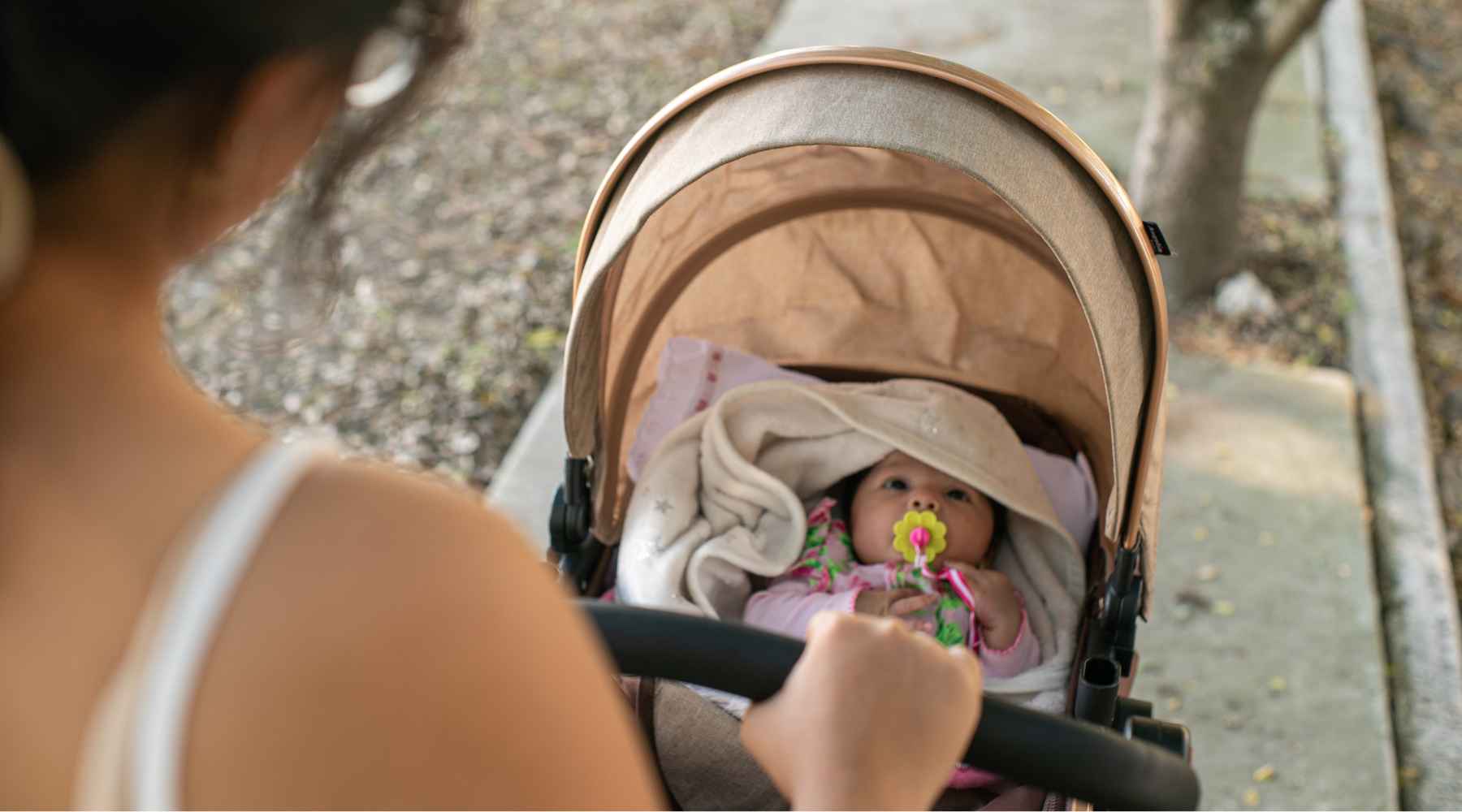 Before comparing stroller weights and folded dimensions, consider your baby's age and developmental stage. Some travel strollers are suitable from birth, while others are designed for babies aged 6 months and above.
Travel Strollers for Newborns
Newborns need appropriate support and a suitable lying position. Look for a stroller specifically approved for use from birth, with a lie-flat recline or manufacturer-approved newborn configuration.
Consider these features:
Lie-flat recline: Provides an appropriate position for newborn use.
Padding and support: Look for a seat designed to support your baby's needs.
Wheels and suspension: Consider how smoothly the stroller handles different surfaces.
Age suitability: Always follow the manufacturer's instructions for newborn use.
Newborn travel strollers may not fold as compactly as models designed for older babies because their designs need to accommodate different seating and recline requirements.
Travel Strollers for Babies Aged 6 Months and Above
Strollers designed for older babies often offer smaller folded dimensions, with some compact enough to resemble the size of a laptop when folded.
Depending on the model, they may feature:
Lightweight frames for easier carrying.
Compact folds for travel and storage.
More upright seating with recline positions around 130 to 140 degrees.
These features can be convenient for travelling and everyday outings. However, check the manufacturer's minimum age requirements and whether the recline suits your baby's needs.
2. Don't Choose a Travel Stroller Based on Size Alone
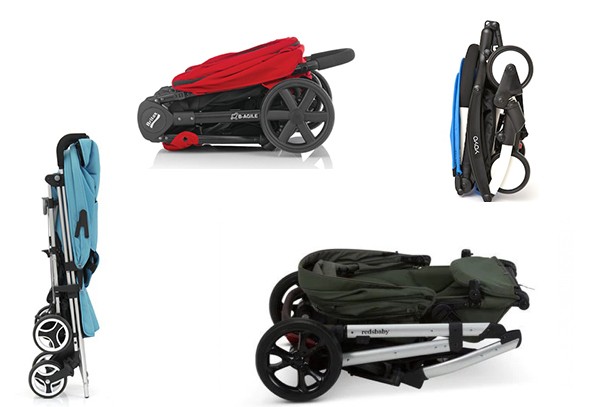
One common situation we encounter at ToySpark is parents with newborns looking for the smallest and lightest travel stroller available.
After explaining the differences between newborn-suitable strollers and compact models designed for babies aged 6 months and above, many parents reconsider their choices.
The main concerns are recline, padding, comfort, and suspension. A stroller may fold down to an impressive size, but that does not automatically make it suitable for a newborn.
Before buying, consider:
Recline: Is it appropriate for your baby's age?
Comfort: Does the seat provide suitable support?
Suspension and wheels: Are they suitable for the surfaces you expect to encounter?
Weight: Can you comfortably lift and carry the stroller?
Folding mechanism: Is it easy to fold and unfold?
Everyday usability: Will it work for shopping trips and regular outings too?
A slightly larger stroller may offer a better balance of comfort and practicality than the smallest available model.
3. Consider Your Baby's Sleeping Habits
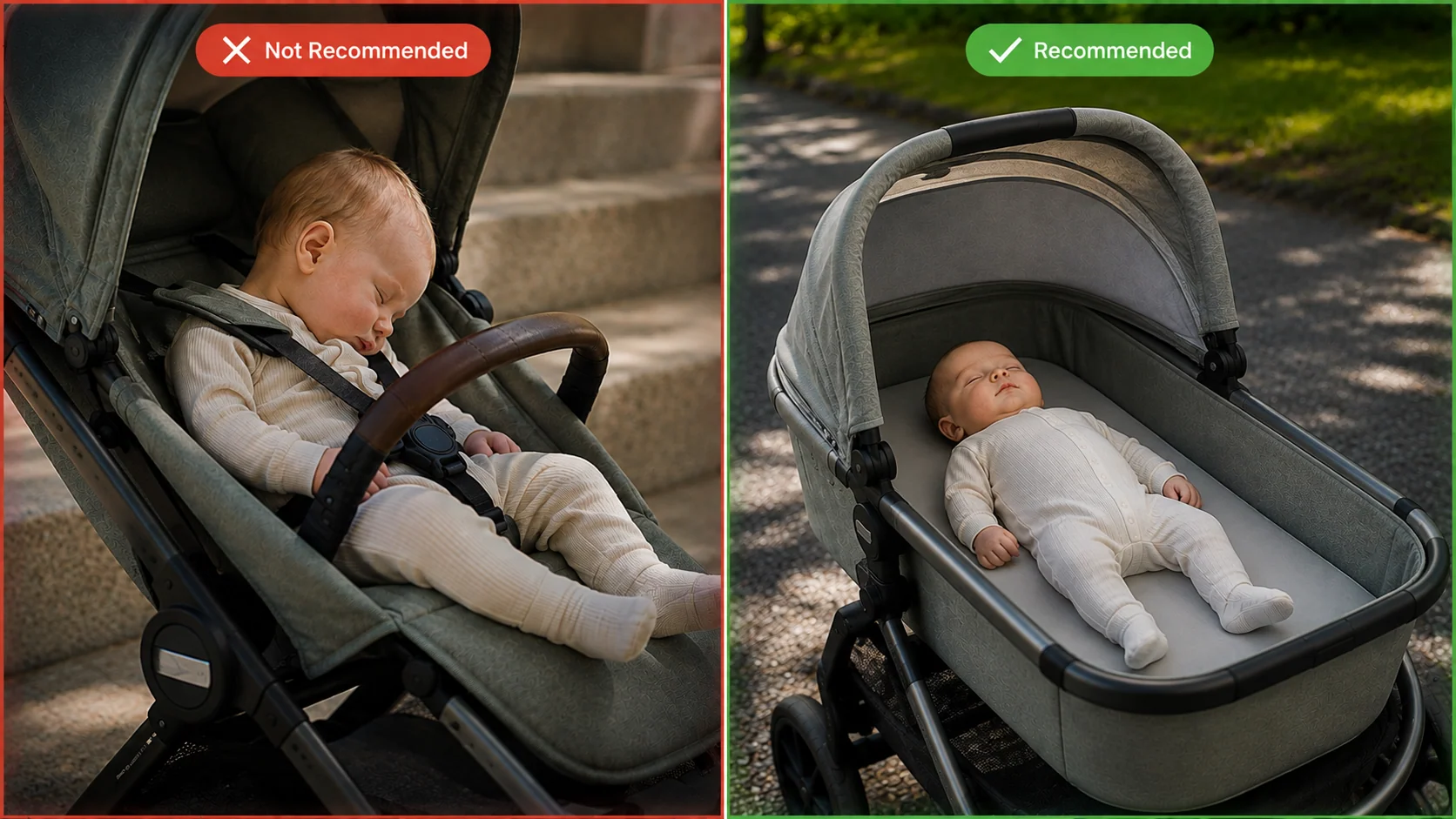 Age is an important starting point, but every baby has different habits. Even a one-year-old may still nap frequently during shopping trips, holidays, and long days outside.
If your baby sleeps regularly in the stroller, pay attention to the recline position and seat comfort. A very compact model with a more upright seat may not be the most practical choice for your family.
On the other hand, if your baby enjoys sitting upright and looking around, a compact stroller may work well, provided it meets their age and developmental requirements.
Our advice is to consider how your baby actually uses a stroller, not just their age.
4. Does Cabin-Size Mean Your Stroller Can Go on a Plane?
 Not necessarily. Cabin-size does not guarantee that every airline will allow a stroller into the aircraft cabin.
Airlines may have different requirements for folded dimensions, weight, and permitted items. Acceptance can also depend on the aircraft and available storage space.
Before travelling, check:
Your airline's current cabin baggage requirements.
Your stroller's folded dimensions and weight.
Whether the stroller can go into the cabin or must be checked in or handed over at the boarding gate.
A cabin-size stroller can make travelling easier, but it should not be your only consideration when choosing a model.
Is the Smallest Fold Always the Best?
Not necessarily. Depending on the model, an ultra-compact design may involve compromises in recline, padding, wheels, or suspension.
For families whose babies nap frequently, a slightly larger stroller with a more suitable recline and comfortable seat may be a better option.
The goal is to find a stroller that makes travelling easier while meeting your baby's needs.
5. Choose a Stroller for Travel and Everyday Use
 Many parents want one stroller that works for both holidays and daily outings. This means balancing portability with comfort and practicality.
Consider these factors:
Weight: A lightweight stroller is easier to lift into a car boot and carry through airports.
Folded size: A compact fold helps when storage space is limited.
Comfort: Consider your baby's seating and sleeping habits.
Ease of use: Check whether you can fold, unfold, and push the stroller comfortably.
Versatility: Think about whether it suits shopping trips, family outings, and your usual travel plans.
The best choice depends on how frequently you travel and how you intend to use the stroller. A model designed primarily for portability may suit some families, while others may benefit from greater comfort and versatility.
6. Try the Stroller Before You Buy
 Product specifications are useful, but they cannot tell you everything about how a stroller feels to use.
If possible, test the stroller in person. Try folding and unfolding it, check how manageable the weight feels, and compare its handling with other models.
At ToySpark, we encourage parents to browse our website or visit our stores for a free consultation and hands-on stroller testing. Our team can help you understand the differences between models and find options that suit your baby's age, comfort needs, and lifestyle.
Frequently Asked Questions
What age can a baby use a travel stroller?
It depends on the model. Some travel strollers are suitable from birth with an approved newborn configuration, while others are designed for babies aged 6 months and above. Always follow the manufacturer's instructions.
Is a lightweight stroller always better for travel?
No. Weight matters, but so do comfort, recline, age suitability, and everyday usability.
Can I use a 6-month-and-above stroller for a newborn?
Not unless the manufacturer specifically approves it for newborn use. Choose a stroller designed for your baby's age and developmental stage.
Can every cabin-size stroller go on a plane?
No. Check your airline's current requirements because cabin acceptance is not guaranteed.
Should I choose a compact stroller or a more comfortable one?
Look for a balance. If your baby naps frequently, recline and comfort may matter more than achieving the smallest possible fold.
Final Thoughts
The right travel stroller should balance compactness, weight, comfort, and everyday usability.
Start with your baby's age and sleeping habits before comparing folded dimensions. The smallest or lightest stroller is not automatically the most suitable for your family.
If you're unsure which travel stroller to choose, explore the options on the ToySpark website or visit our stores for a free consultation and hands-on stroller testing.
Not sure which baby car seat suits your family best?
👉 Click here to browse more current baby car seat options in Malaysia – https://www.toyspark.my/collections/baby-car-seat
👉 Walk in to ToySpark and test the cabin size stroller yourself
👉 Chat with us for personalised recommendations
ToySpark Contact
ToySpark Kulai: http://www.wasap.my/60167144646
ToySpark Johor Bahru: http://www.wasap.my/601110019898